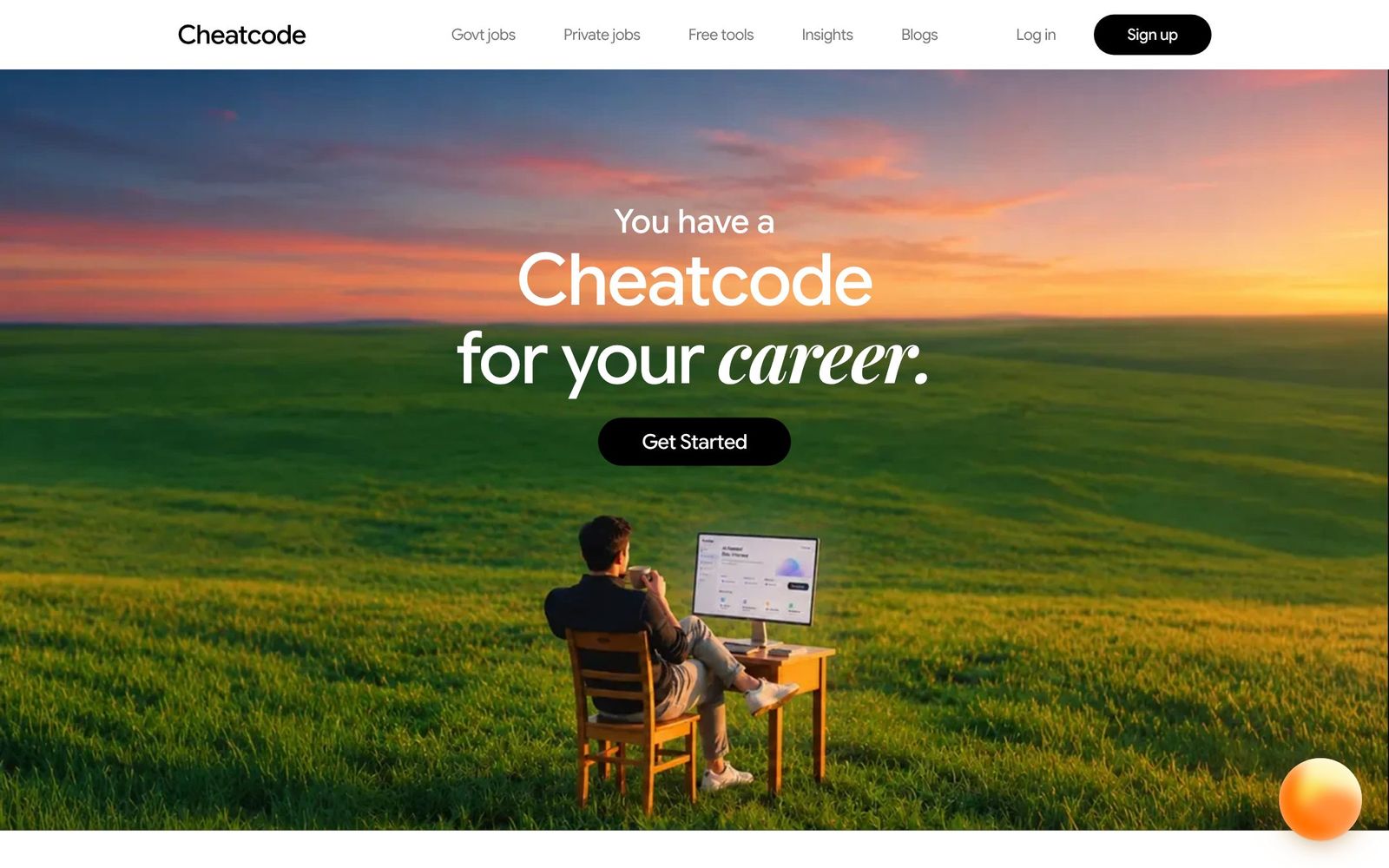
The shortcut nobody hands you.
People who move fast early in their careers usually aren't smarter. They just had someone to ask: a cousin at Google, a senior who'd read a hundred resumes, a friend who explained what CTC really means.
Cheatcode is that someone, built as a product. It's for final-year students and people in their first few years of work: placements, the first switch, or wondering whether the job they took was a mistake.
Everything a person needs to get started is free with no time limit and no card. Cheatcode Pro adds the AI agent, mock interviews and an expert resume review for ₹99 a month.
Under-advised, not underqualified.
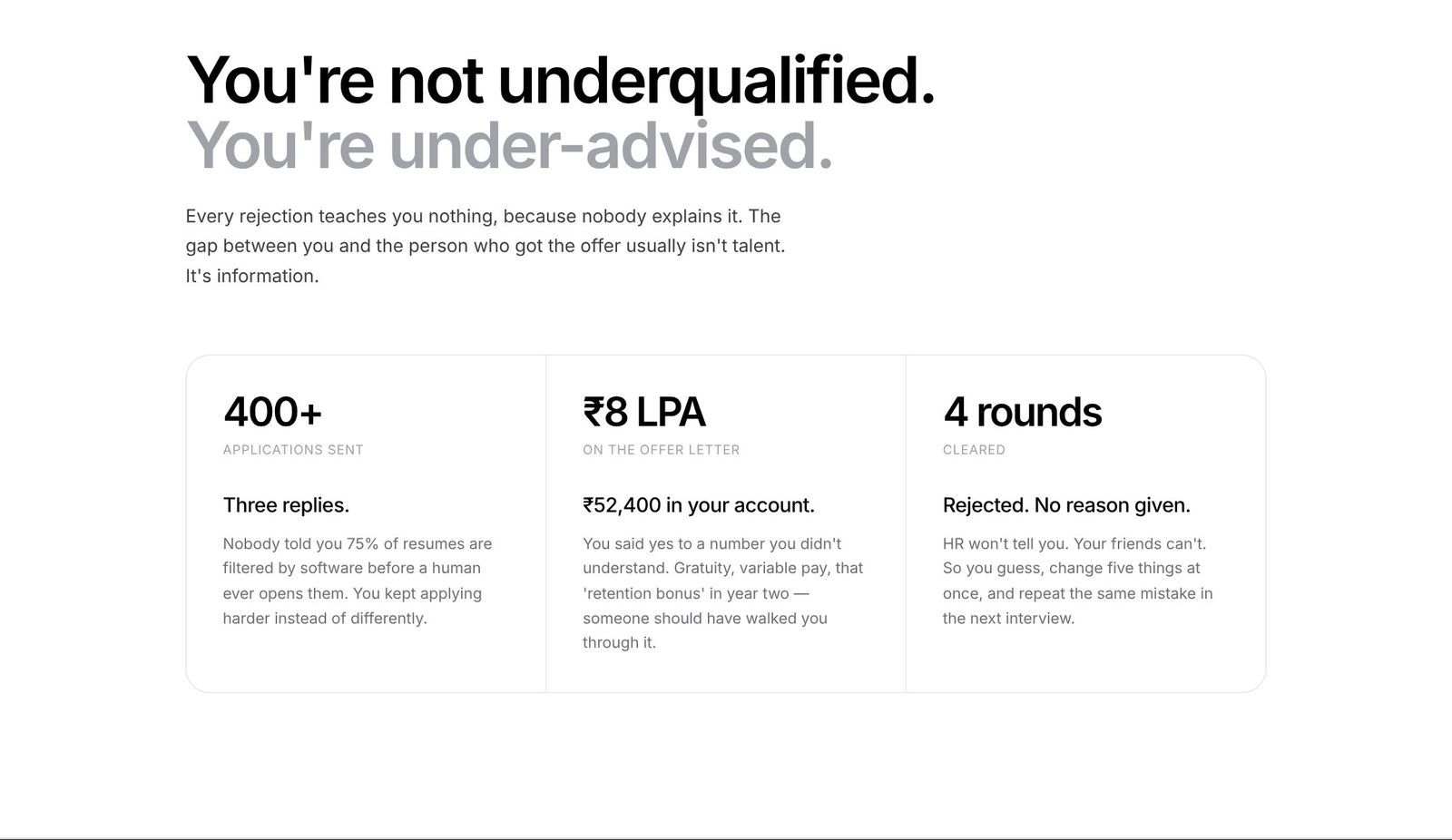
Early-career people in India make big decisions with almost no feedback. Every rejection teaches them nothing, because nobody explains it.
You're not underqualified.
You're under-advised.
The gap between you and the person who got the offer usually isn't talent. It's information. That one line became the brief for the whole product.
Three replies.
Most resumes are filtered by software before a person ever opens them. People apply harder instead of differently, because nobody shows them what the software reads.
₹52,400 in the account.
People say yes to a number they don't understand. Gratuity, variable pay, a "retention bonus" in year two. Somebody should have walked them through it.
Rejected. No reason given.
HR won't say why. Friends can't. So people guess, change five things at once, and repeat the same mistake in the next interview.
These are the three stories the home page tells. Each one maps to a tool: the ATS checker, the salary calculator, and AI mock interviews with a written report.
Three people, one window.
The product is built for a specific window: the first few years of a career. These personas are composites of the questions the product is built to answer.
The final-year student
"Placements start next month and my resume is a Word file from second year."
- Needs a resume that passes screening
- Has never done a real interview
- Can't pay for coaching
The first switcher
"I'm two years in. Is 6 LPA bad? Should I take the service-company offer?"
- Needs to compare offers honestly
- Wants roles filtered to their city and years
- Doesn't trust generic advice
The government-job aspirant
"I check six websites every morning so I don't miss a notification."
- Needs every notice in one place
- Cares about dates, admit cards, results
- Often on a phone with patchy data
What shaped every decision.
Before any screen was designed, I wrote down how the product should behave. These four lines settled most arguments later.
Give before you ask.
A first-jobber won't hand over a phone number to a product they haven't tried. So the resume builder, all 60 templates, the ATS checker and the salary calculator work before sign-up.
Honest beats impressive.
No ATS publishes its scoring, so any tool claiming to return your "real Workday score" is guessing. Cheatcode measures the checkable half and says so out loud.
Built for India, not translated.
CTC and in-hand pay, LPA, professional tax by state, government notifications, rupees, UPI Autopay, and sign-in with a phone number.
One place, not another tab.
Advice online is written for a million people and none of them is you. When the tools share your resume and profile, the answers stop being generic.
From a sentence to a live product.
Designing and building it myself meant the loop between an idea and a deployed screen was hours, not weeks.
Discover
Listed the questions freshers actually ask, and the moments they get stuck.
Define
Wrote the brief, the four principles and the free-versus-Pro line.
Design
Brand world, type, components, then every flow mobile-first.
Build
Next.js, Supabase and AI providers, shipped straight from the design.
Launch
Free tools and guides first, to earn search traffic and trust.
Iterate
Analytics, Search Console and admin dashboards decide what's next.
Three surfaces, one system.
An open public site brings people in, the app keeps them, and an admin studio lets one person run all of it.
Public site
Open to everyone, built for search- Home
- Free tools
- ATS checker
- Salary calculator
- Resume templates
- Government jobs
- Private jobs
- Interview questions
- Guides & blog
- Insights
The app
Signed in with Google or a phone number- Dashboard
- Resume builder
- Templates
- AI mock interviews
- Interview feedback
- Jobs
- AI career agent
- Profile
- Upgrade to Pro
Admin studio
How one person runs the product- AI usage & cost
- Traffic
- User journeys
- Leads
- Articles & SEO
- Government notices
- Resume requests
- Pro & payments
- Team
What I designed and shipped.
Each feature answers one of the stories from the problem section, and each one is live today.
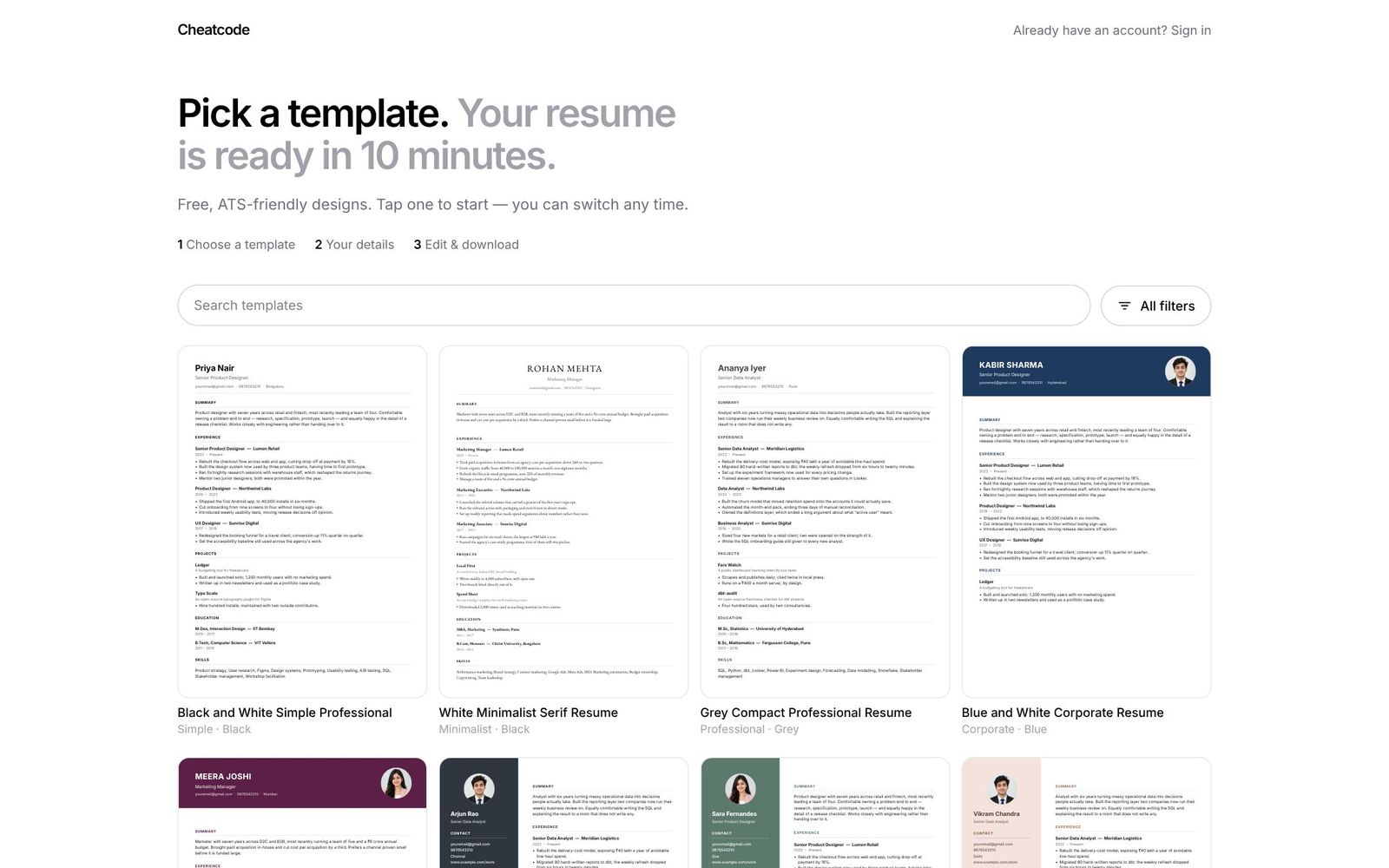
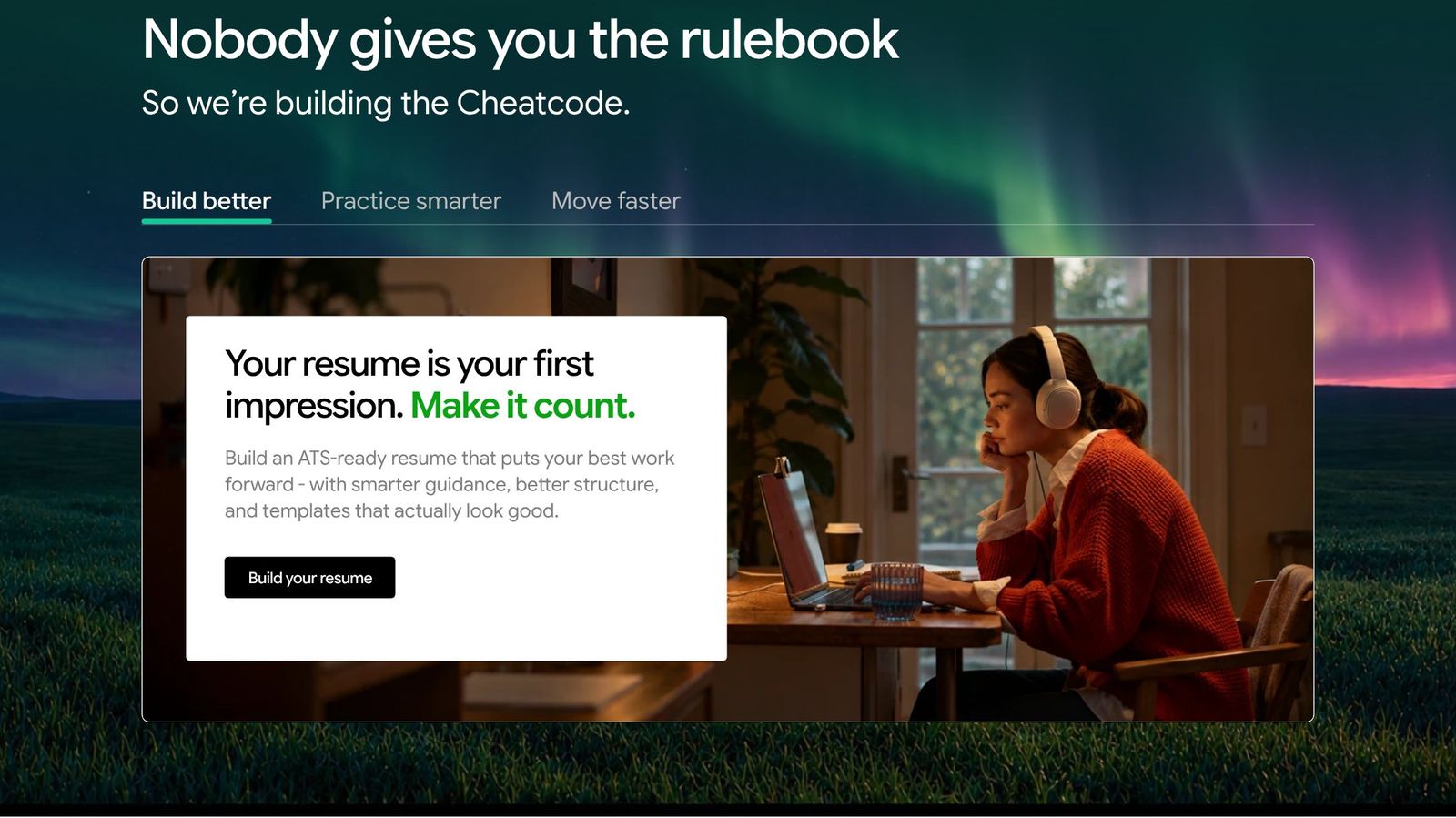
Your resume is ready in ten minutes.
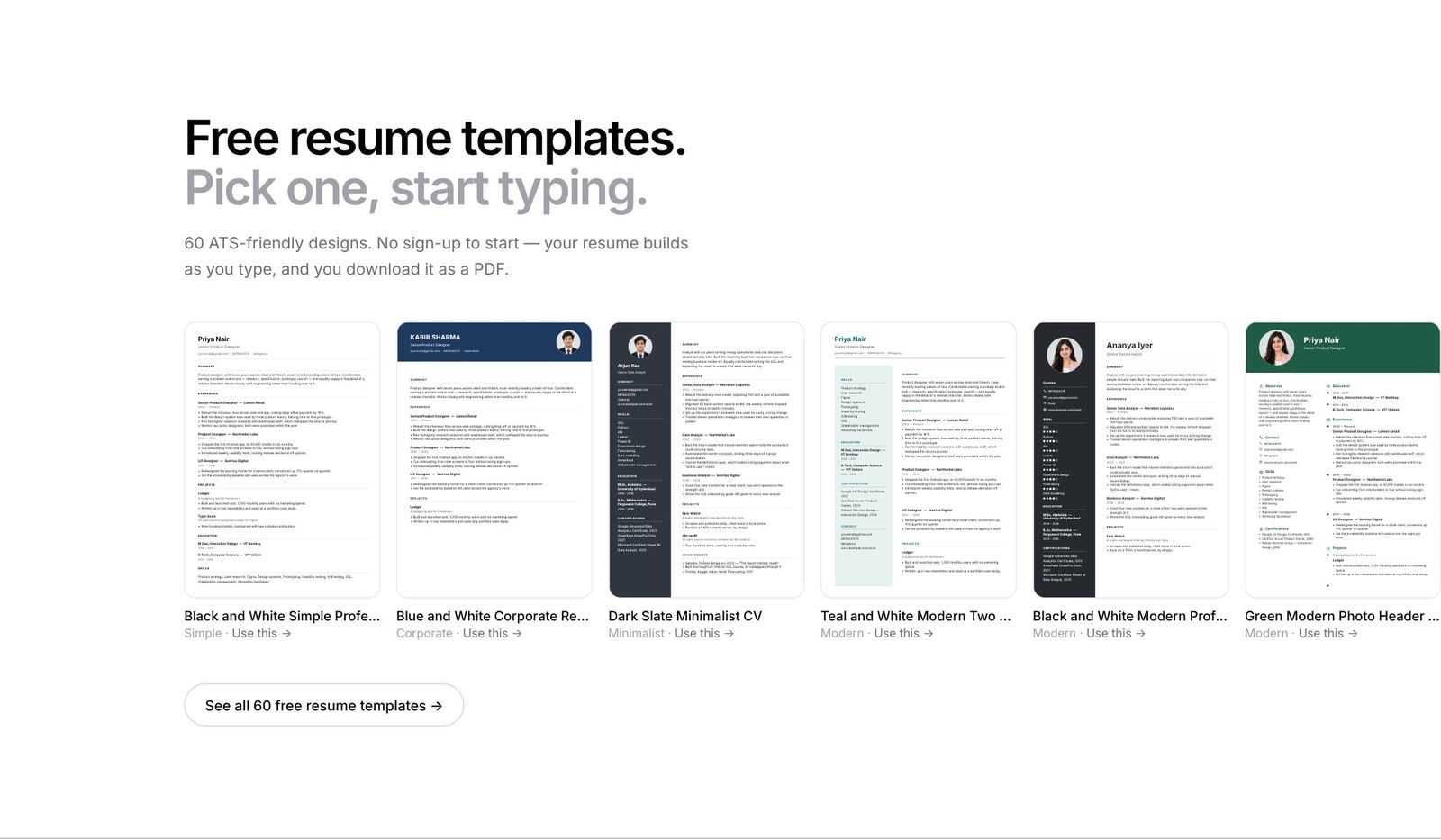
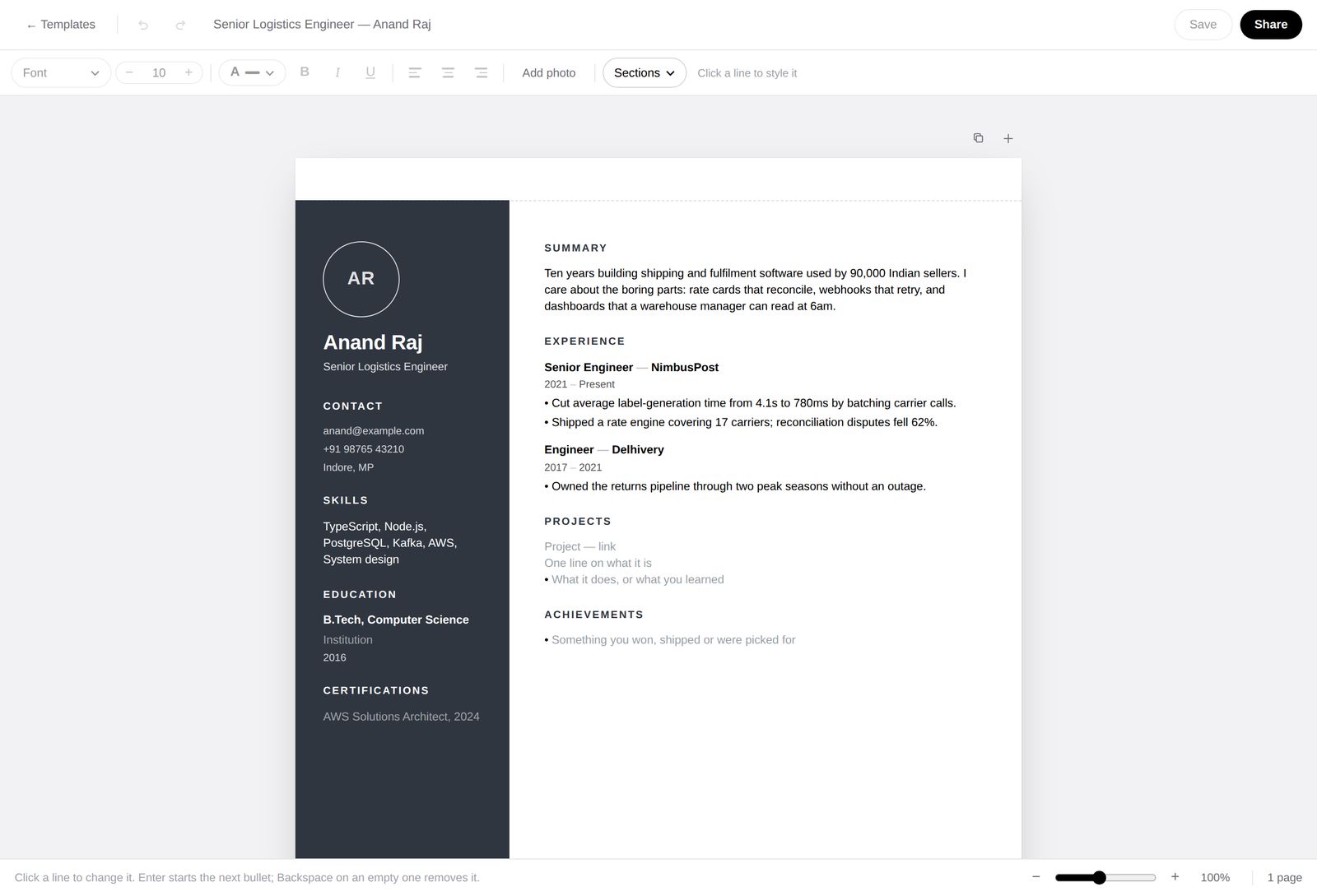
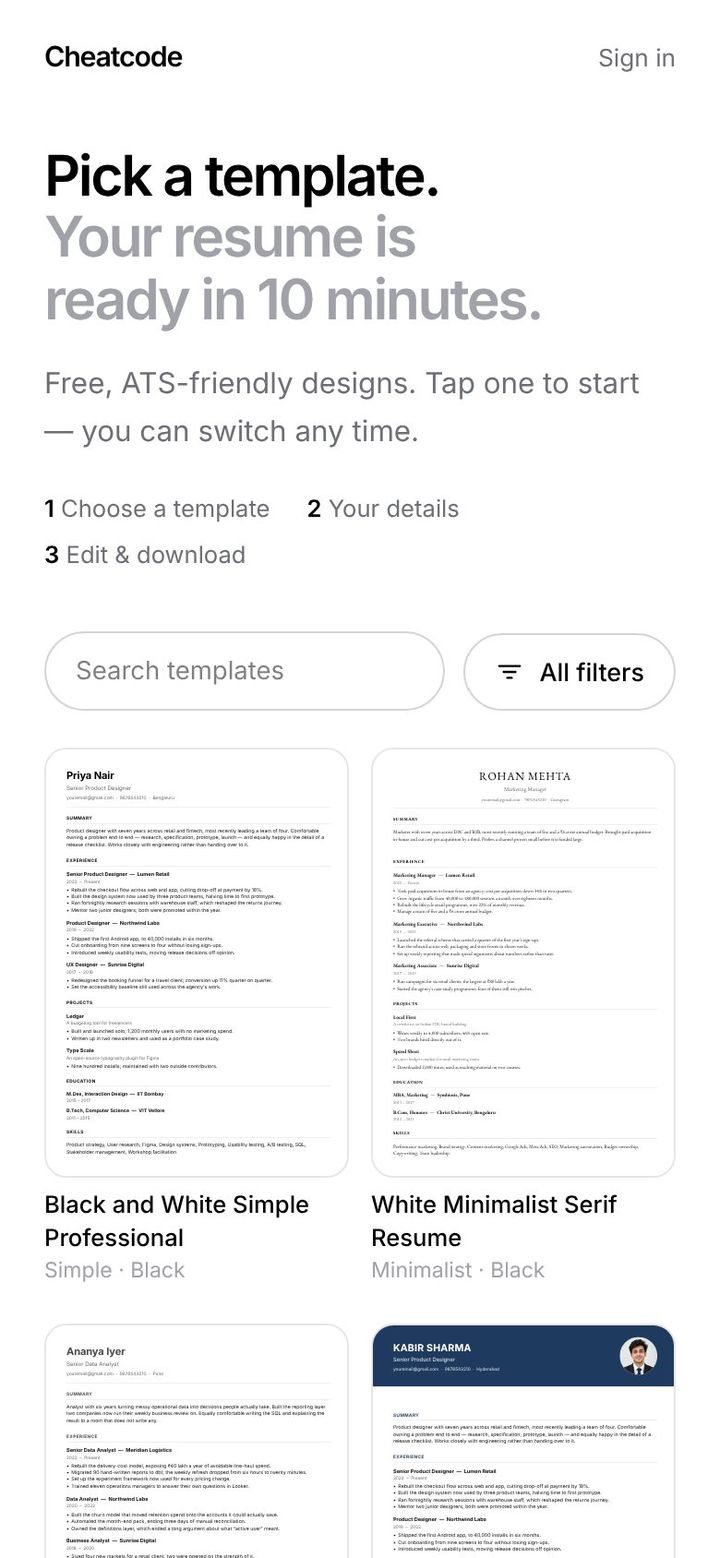
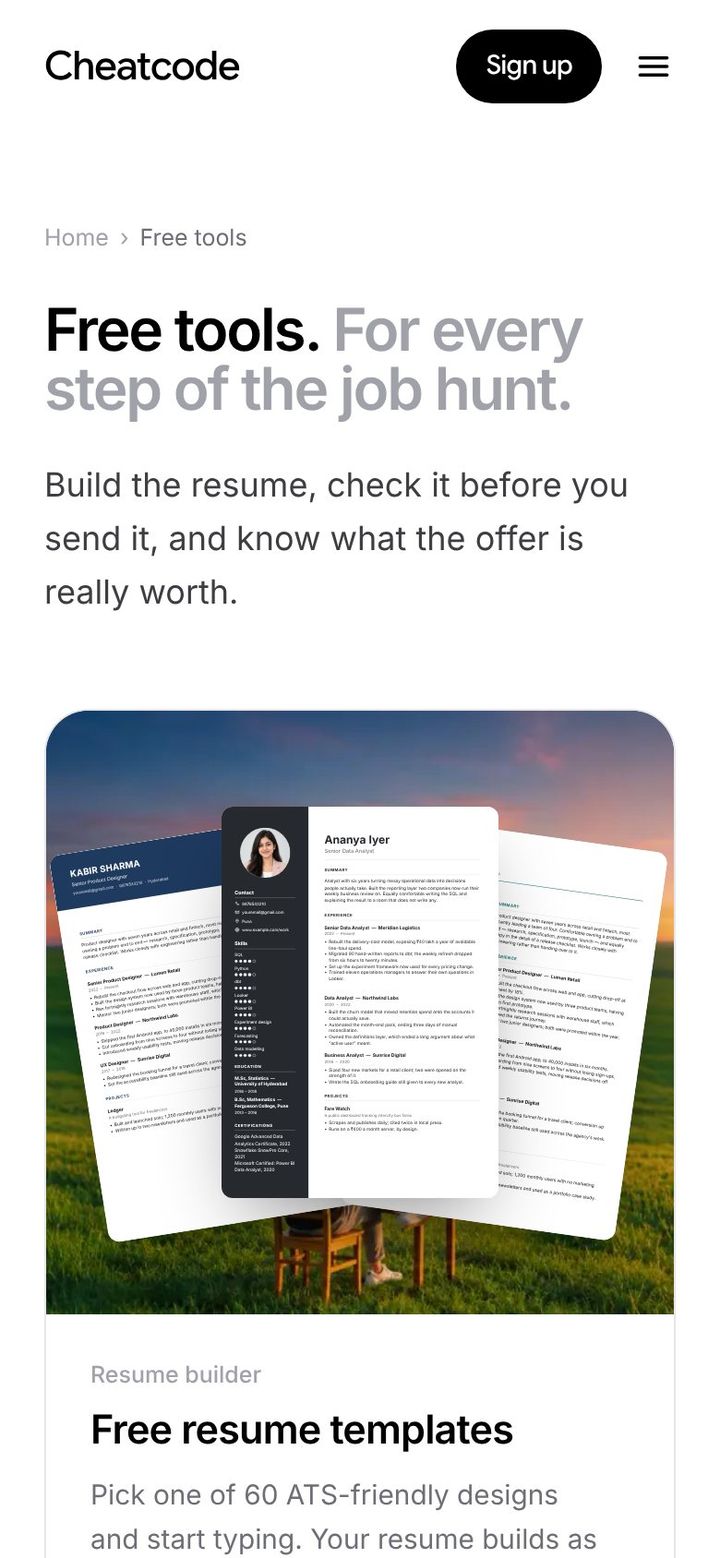
Pick one of 60 ATS-friendly templates, type into a form, and watch the resume build beside it. Switch templates any time without losing a word. Download a clean PDF with no watermark.
- No sign-up until you want to save
- Photo upload with crop, zoom and move
- A line-by-line editor for the final polish
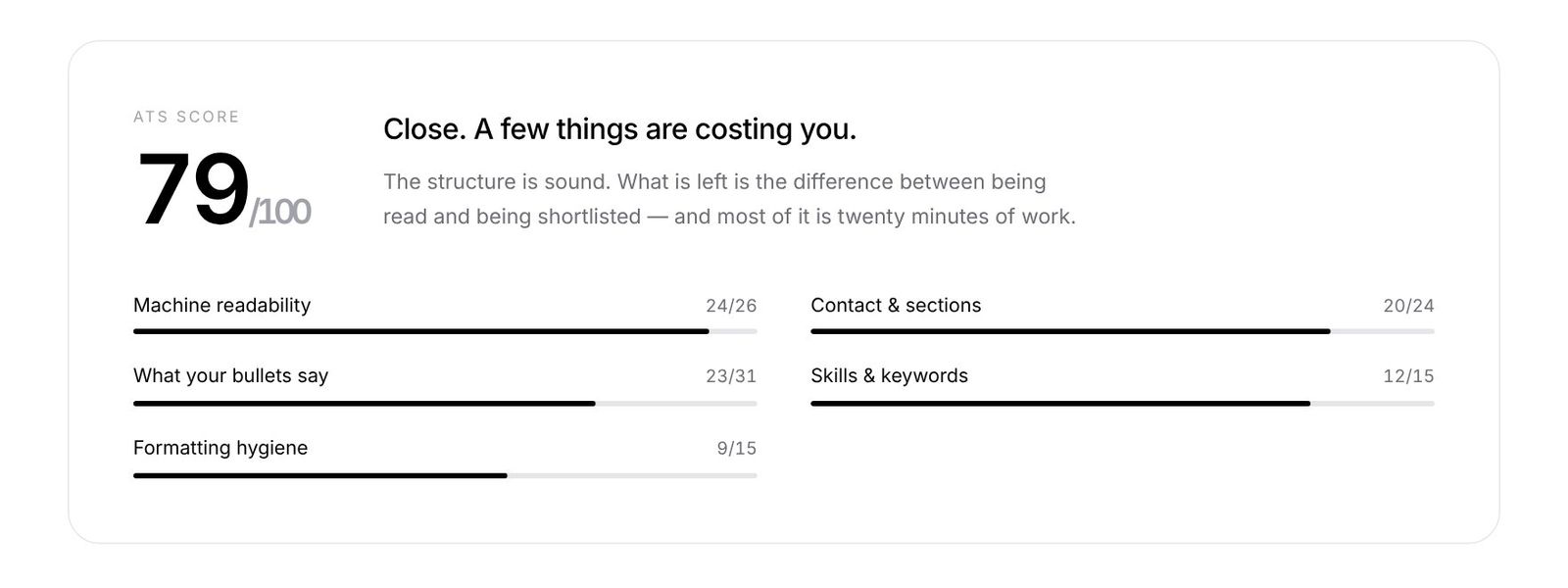
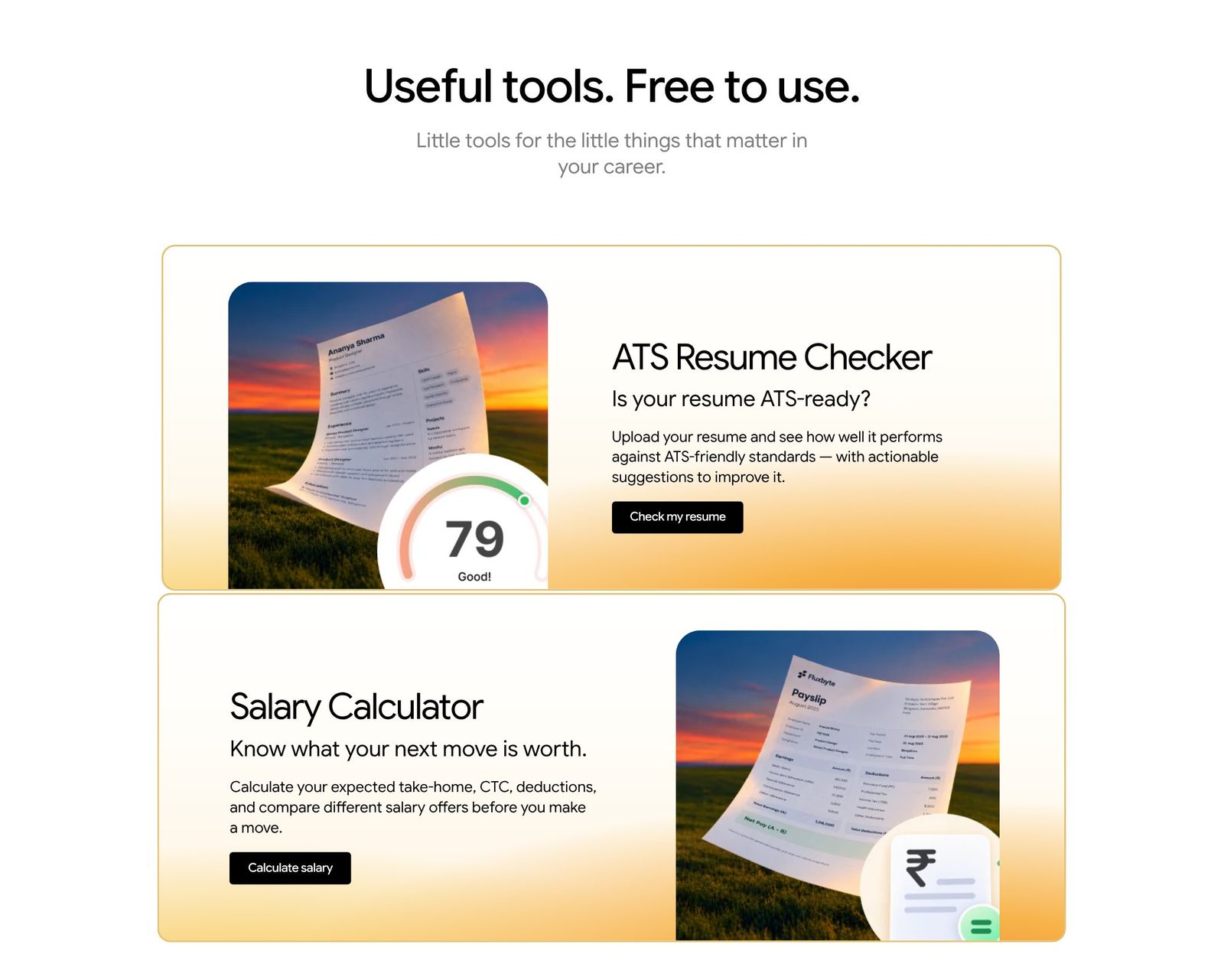
See what the software sees.
Drop in the resume you're already sending. It's read inside the browser and never uploaded. You get a score out of 100, broken into five parts, and the exact lines costing you points, fixes first.
- Checks two-column layouts that break parsers
- Action verbs, numbers, dates and skills
- Says plainly what no tool can know
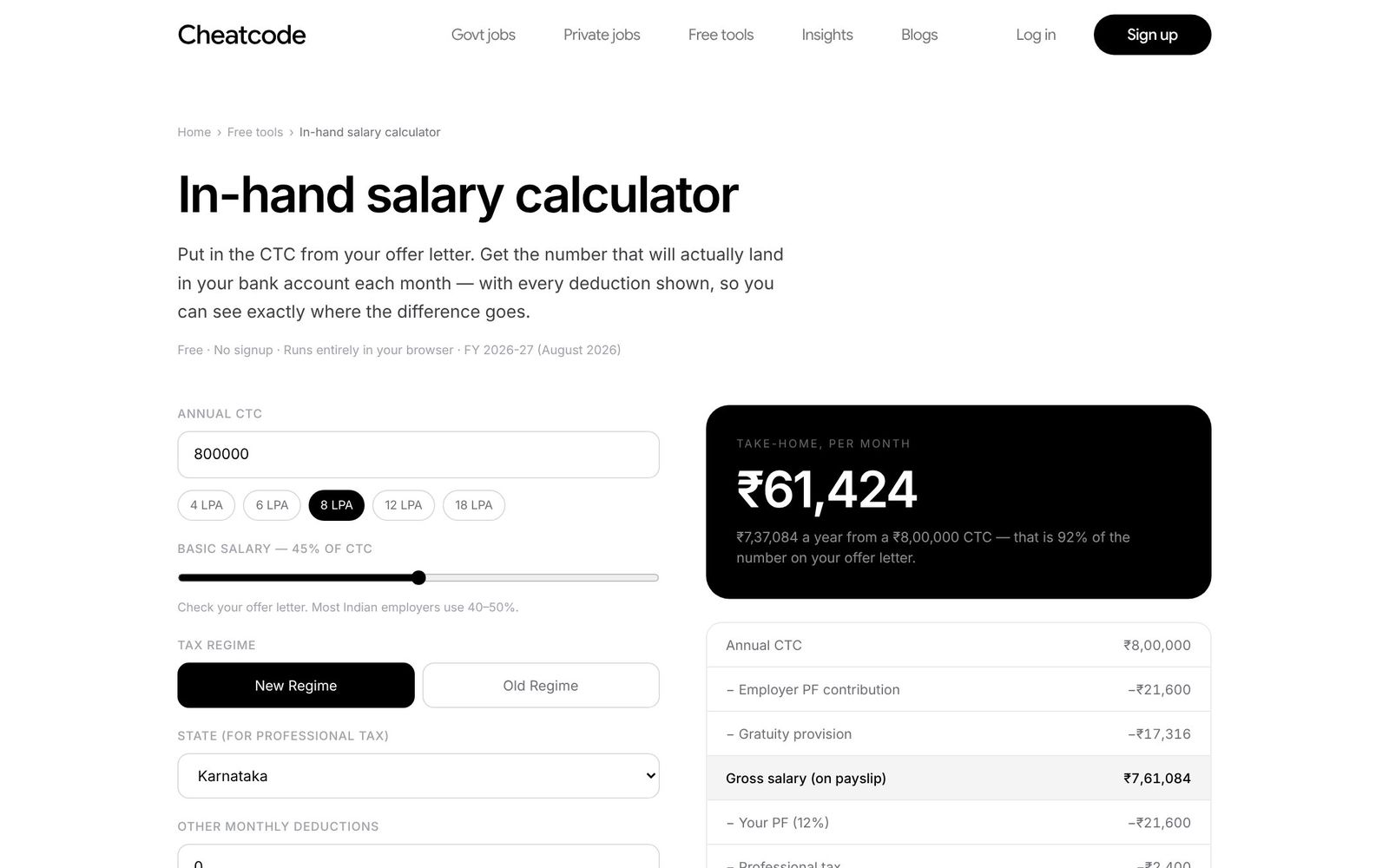
Know what the offer is really worth.
Turn the CTC on an offer letter into the number that reaches your bank account each month. Employer PF, gratuity, professional tax by state, and the old and new tax regimes, line by line.
- Quick presets from 4 to 18 LPA
- Every deduction shown, not summarised
- Written for Indian payslips
Practise before it matters.
Mock interviews for your role and level, with a written report afterwards. A career agent that has read your resume answers the questions people are embarrassed to ask: "Is 6 LPA bad?", "How do I explain a gap?"
- Talk to the agent by voice, in real time
- Feedback you can act on, not a score
- Part of Pro, ₹99 a month
The calls that mattered.
Each decision traded something away. These are the ones I'd make again.
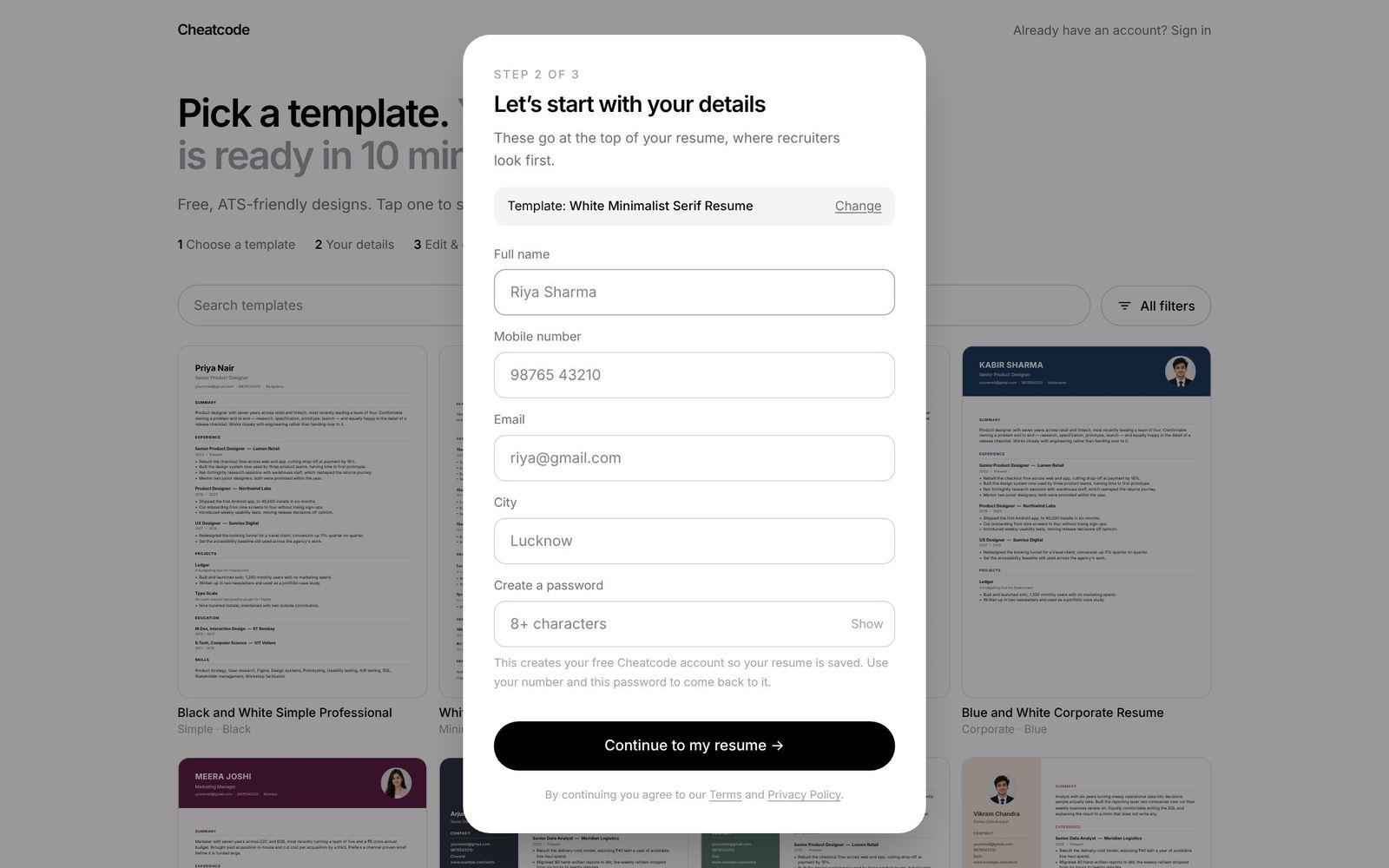
A sign-up wall before the first resume line loses most visitors.
A guest builder. Pick a template and start typing. The save step uses the same sign-in card as the rest of the app, prefilled from the resume.
People sign up once they've already got something worth keeping, so the account feels like saving their work, not paying a toll.
Competitors promise an "exact ATS score". It's a guess dressed as data.
Score only what can be checked, show each part of the score, and explain the limitation right on the page.
For a product built on "someone who'll tell you the truth", trust is the feature. One honest page is worth more than a flattering number.
Students won't enter a card, and email isn't how most of them sign in.
Google or phone-number sign-in, and a single ₹99 Pro plan on UPI Autopay. No lock-in, no cancellation fee.
One price is easy to explain. UPI is how this audience already pays. The price list fits in one sentence.
A new product has no audience and no ad budget.
Lead with free tools, guides and government-job pages that people already search for, and link them into the product.
Search traffic compounds. Every useful page is a door into the builder, and the tools prove the product before anyone pays.
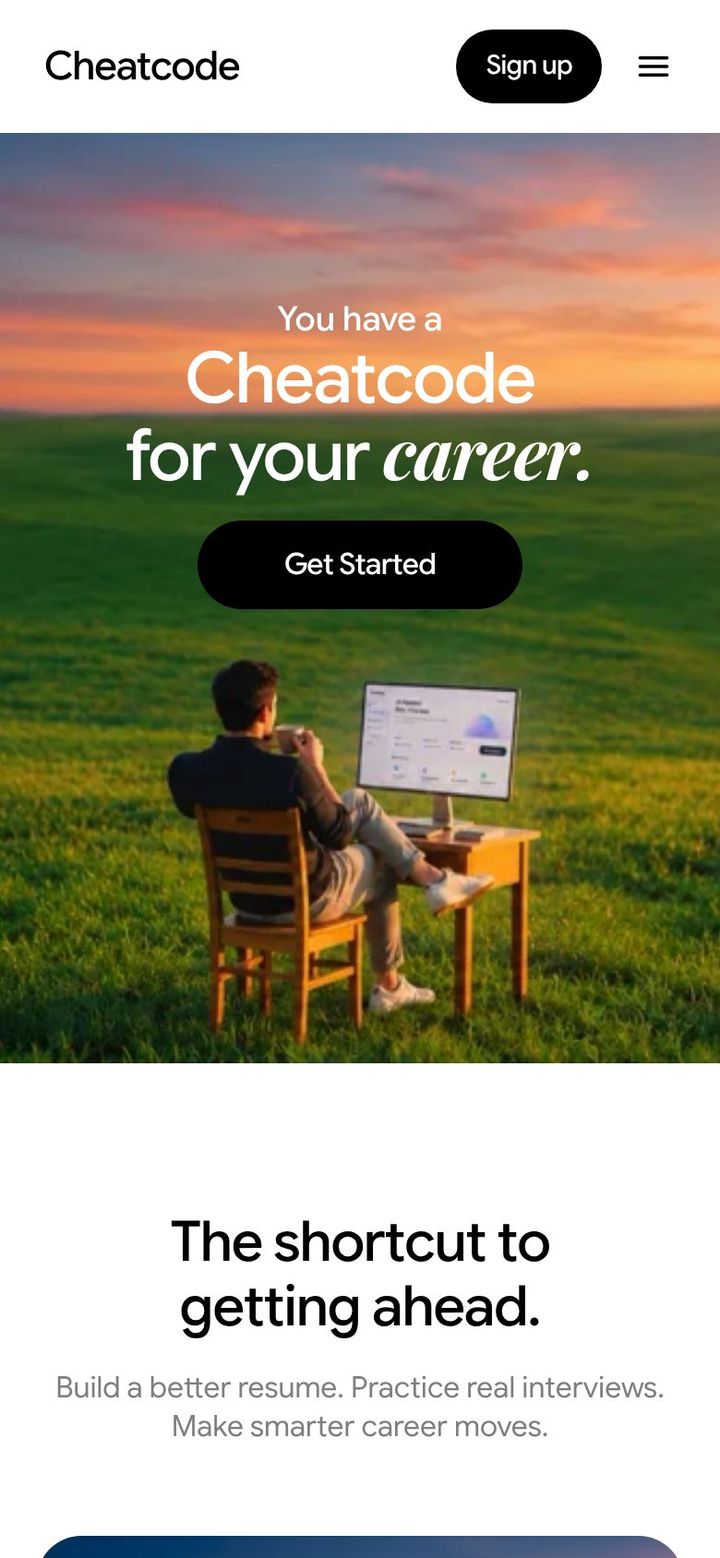
Calm, warm, a little cinematic.
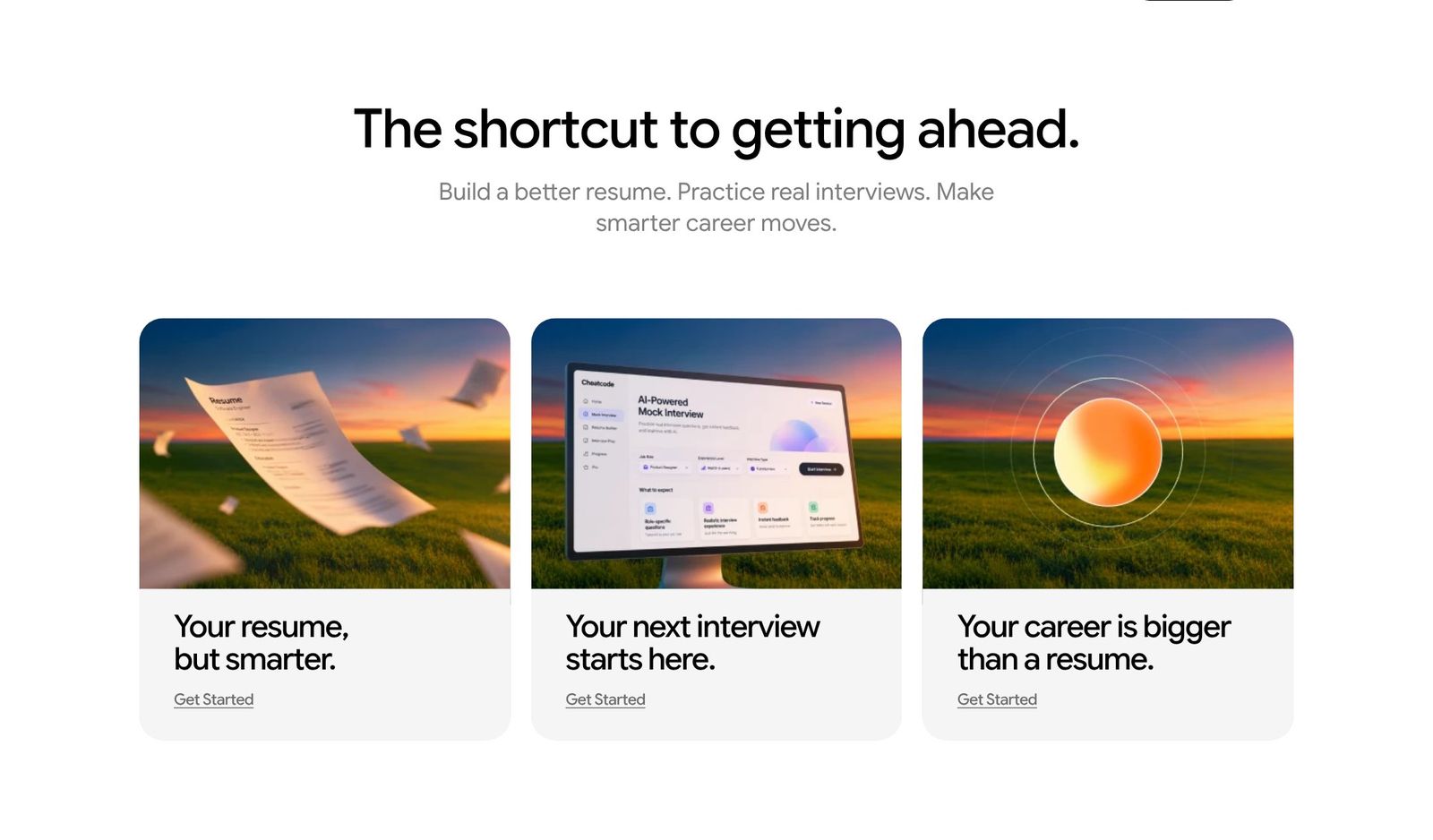
Career tools usually look anxious: red badges, countdowns, stock photos of handshakes. Cheatcode is a wide-open field at golden hour, saying there's room to figure this out.
Designed for the phone in their hand.
Most of the audience is on a phone, often on mobile data. Every flow was designed at 390px first, then given more room on desktop.
Designed it. Built it too.
Owning the code meant design decisions never got lost in a handoff, and I could judge every idea against what it would cost to run.
Product & front-end
The app is server-rendered for speed and search, with the resume preview drawn live in the browser as you type.
AI that earns its cost
Chat, resume reading and voice each pick their own provider, with a fallback if one has a bad day. An admin dashboard tracks the cost of every model call, by feature and by person.
Data, payments, growth
Accounts and resumes live in Postgres. A scheduled job keeps government-job notices fresh. Payments run on UPI Autopay, and SEO is handled inside the product.
Live, free to start, and growing.
Cheatcode is live at cheatcodeapp.com. Here's what it covers today.
What I'd tell myself on day one.
Write the principles first.
"Give before you ask" and "honest beats impressive" settled dozens of later decisions in seconds, from the sign-up flow to the copy on the ATS page.
Copy is interface.
The product's voice, plain, specific and a little warm, did as much work as any layout. "₹52,400 in your account" explains the salary tool better than a feature list.
Measure the expensive parts.
AI features feel free while you design them. Tracking cost per feature, per person, from day one kept the ₹99 price honest.
What's next: mentor sessions
One-on-one time with people five to ten years ahead. Mentors are being onboarded first, because a thin mentor pool is worse than none.
See it in action.
Build a resume in ten minutes, or check the one you're already sending. No sign-up to start.